The Reconstruction Project
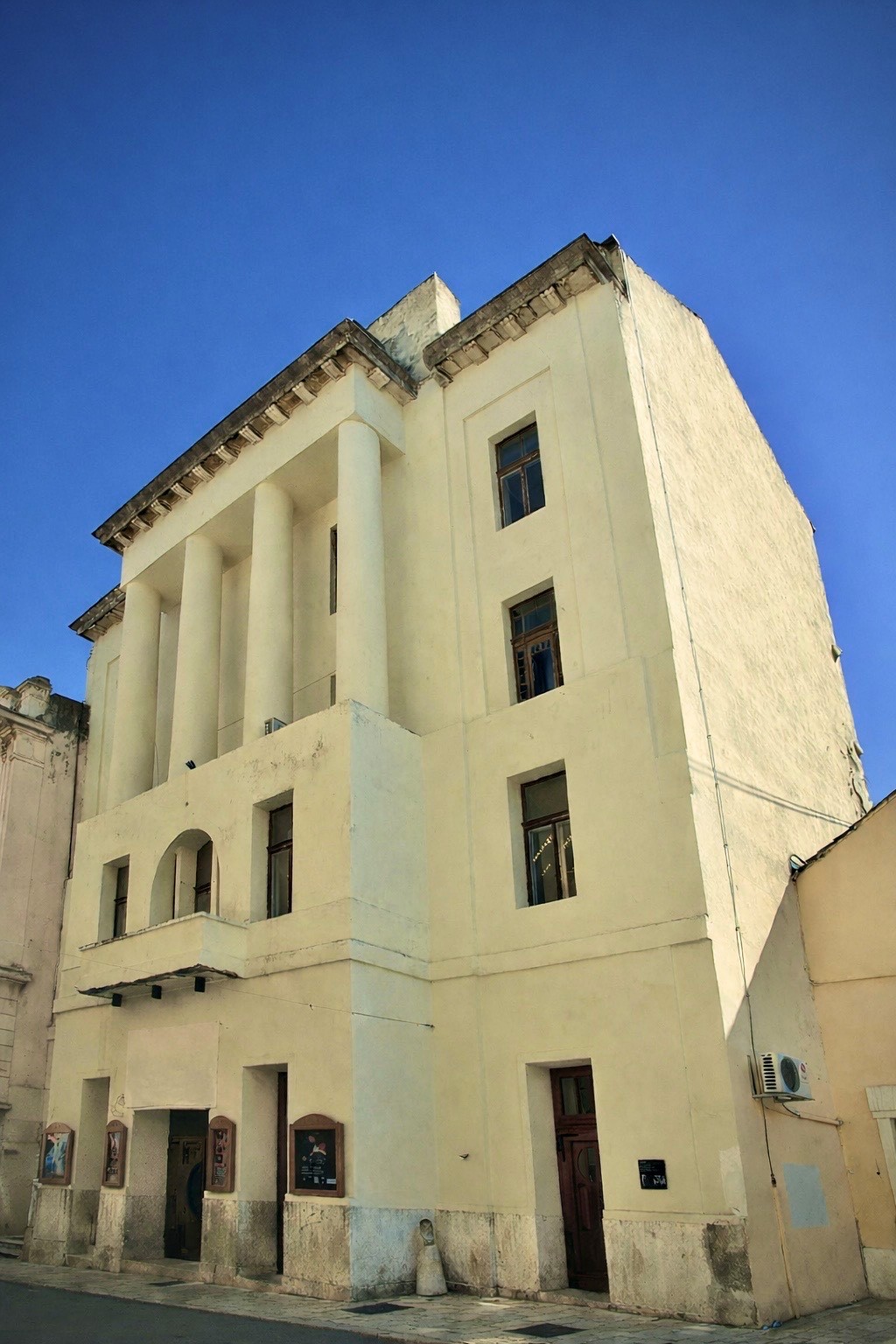
The reconstruction of the building was initiated with the aim of reaffirming its original architectural identity and reintegrating it into the contemporary cultural life of the city. Extensive research identified traces of the original decoration and enabled a clearer understanding of the building’s initial design. The reconstruction and restoration lasted from 2005 to 2020. The project was carefully led from the very beginning by conservation architect Sanja Buble, and in 2019 she was joined by art historian and conservator Sandi Bulimbašić.
Materials and techniques
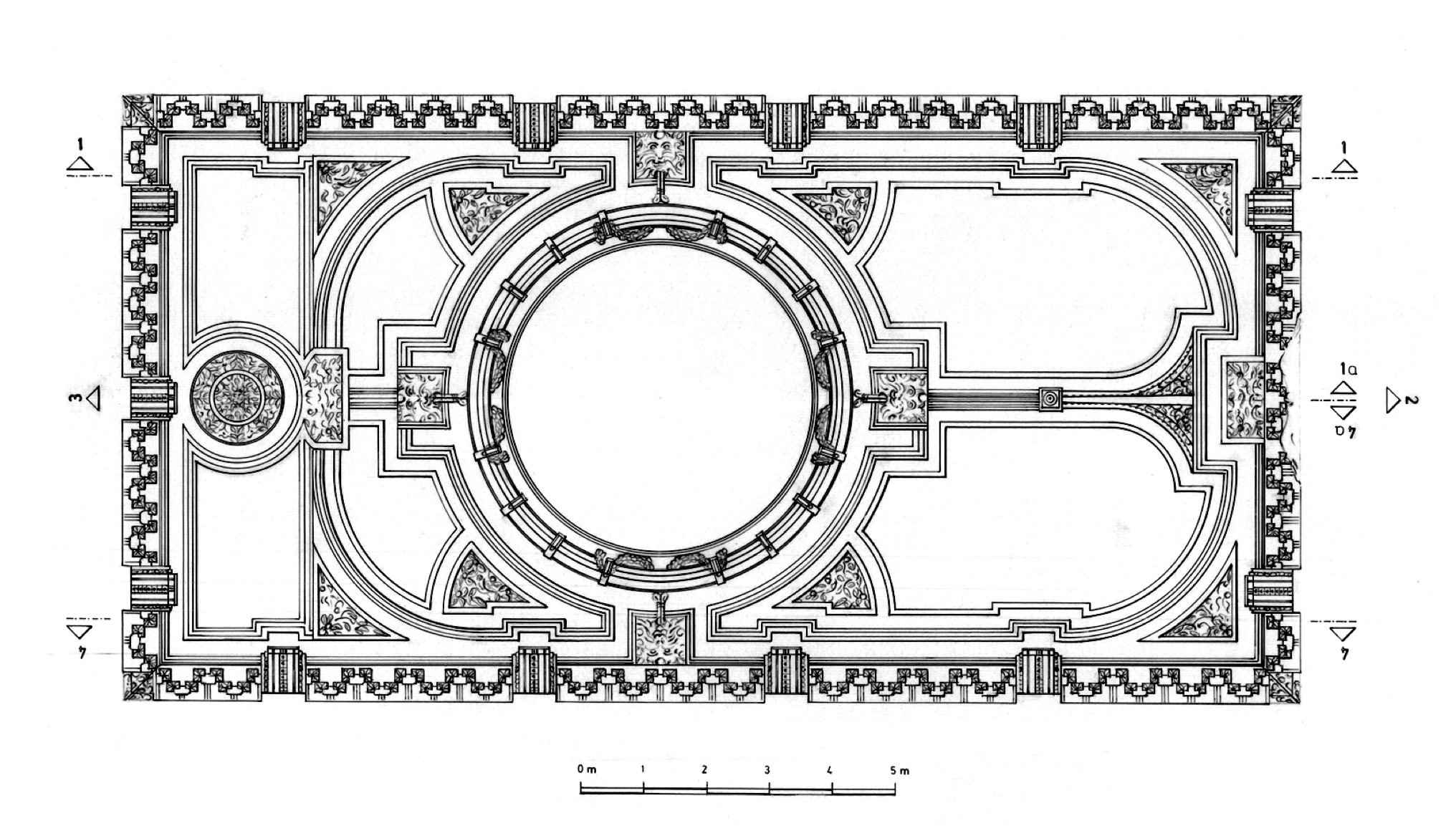
The façade and main hall were restored with a high level of historical accuracy, making the project an exemplary case of heritage conservation. The original appearance was reconstructed using the method of manually constructed perspective based on historical photographs. At least two photographs taken from different angles, along with an architectural survey of the existing condition, were required to produce architectural drawings. This made it possible to precisely determine the dimensions and positions of the decorative elements. The resulting drawings served as a basis for conservation-restoration research, including the investigation of possible remains of decorations beneath the plaster, as well as for their modeling.
The Restoration Process
Conservators determined that the projections and decorative bands were made using templates in plaster, while the relief decorations were cast—concrete on the façade and plaster in the interior; the ornaments were produced by the former factory Gilardi & Bettiza according to Tončić’s designs. Since photographs were the primary source, shaping each element required creative sculptural skill and a strong sense of spatial understanding. For elements that were not clearly visible, comparative examples were used, particularly the nearby Sulphur Bath building in Marmont Street.Due to a small number of preserved fragments, modern restoration materials were used, such as restoration mortar on the façade and other adapted materials in the interior. Contemporary techniques, including 3D scanning, CNC processing, and 3D milling, were applied. Some original elements had iron reinforcement that corroded over time and have now been replaced with stainless steel reinforcement.
Main Façade
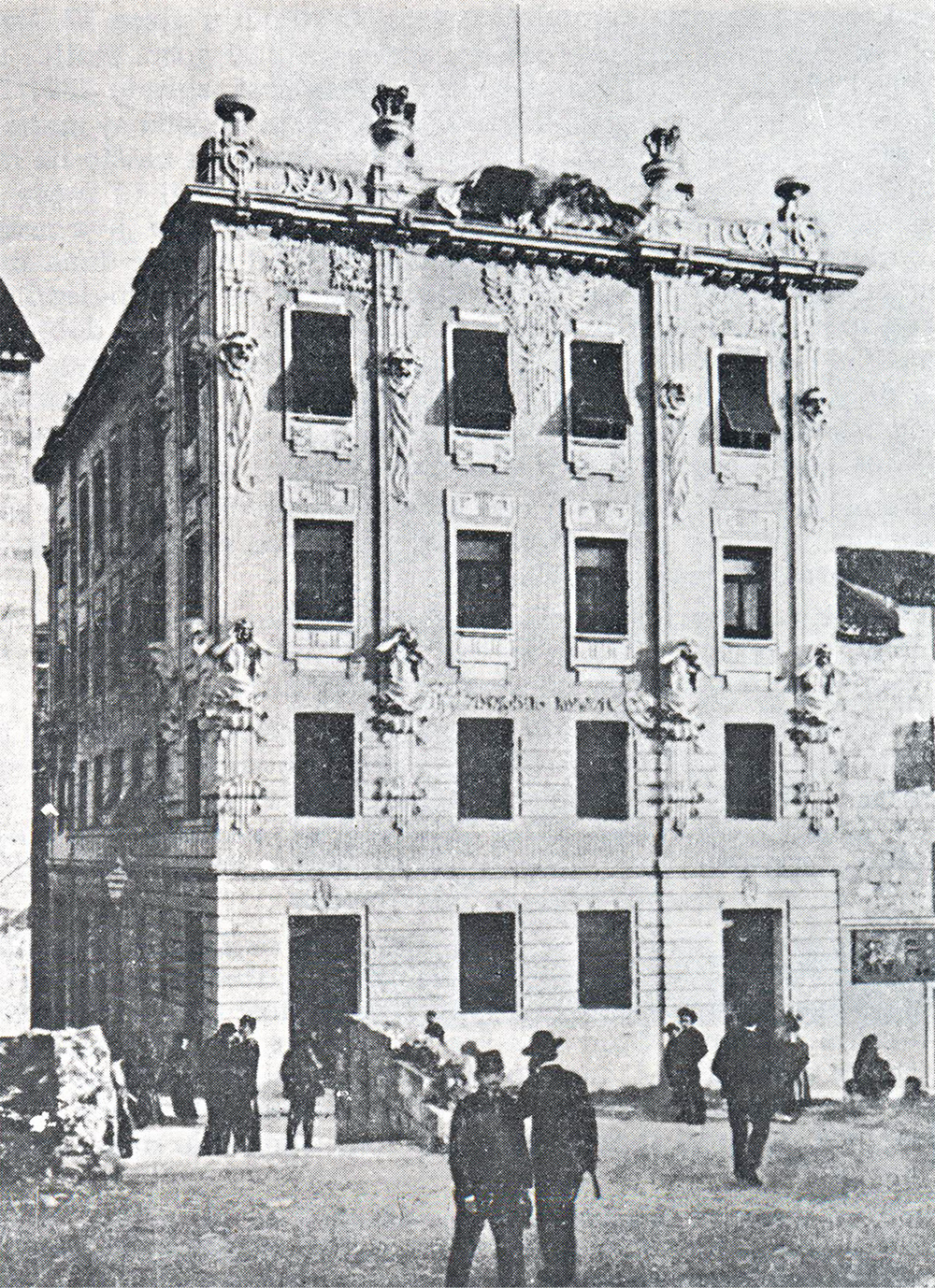
According to plans, the main façade is symmetrical, with a central entrance framed by pilasters, a lunette, and a balcony. Conservator research has established that the executed design was much richer in ornamentation and that some motifs were altered during construction: the oval medallions beneath the third-floor windows were executed as female heads. The distinctive entrance doors, consisting of glass panels set in a wooden frame, were reconstructed on the basis of surviving originals.
Floor plan organization
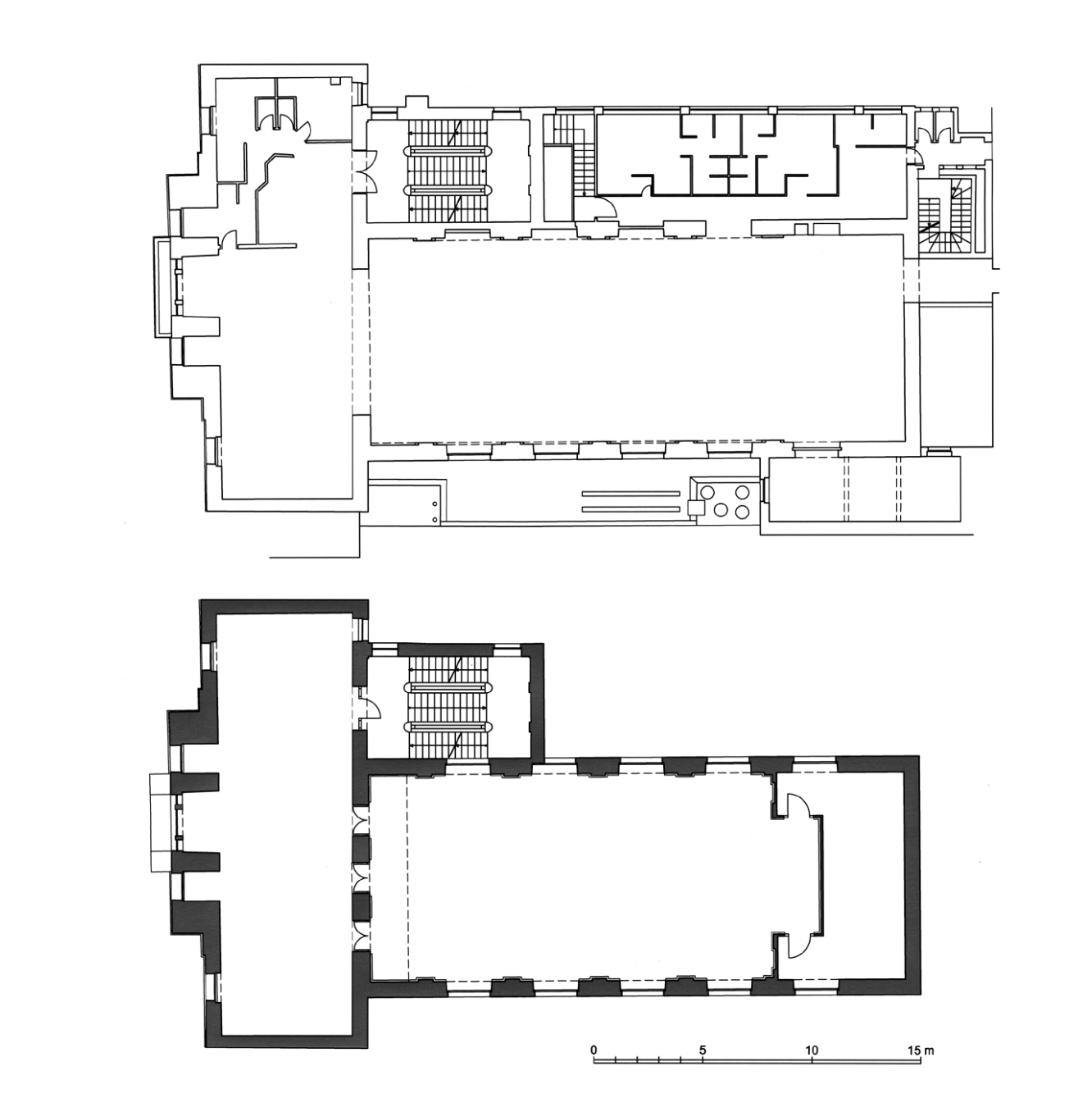
The building, set on a rectangular plot with its shorter side facing the street, has a T-shaped layout: the narrow, three-story street wing housed society rooms, while the rear wing contained the ceremonial hall above and the fire brigade below, efficiently combining, on a limited plot, organizational spaces with a large hall for concerts, gatherings, and gymnastics.
Main stairwell
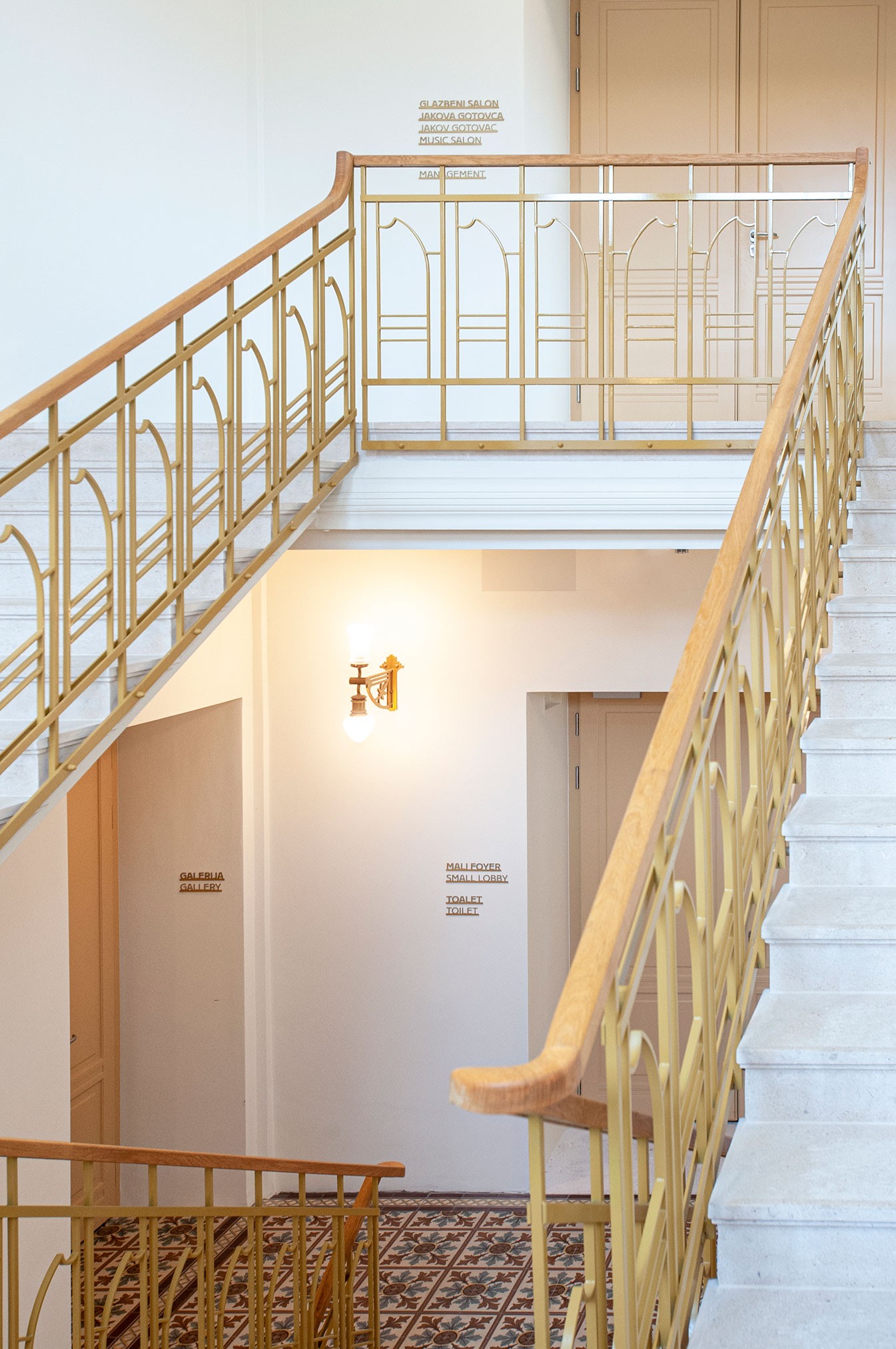
The main entrance opens into a vestibule, from which visitors could access a secondary entrance or the grand three-flight stone staircase connecting all floors of the building. The staircase walls were articulated with shallow pilasters and continuous moldings along the wall-to-ceiling junction, creating a rhythmic emphasis on verticality. The landings were decorated with geometric mosaic tiles, while large arched windows provided natural light, although some were later partially bricked.
Total work of art
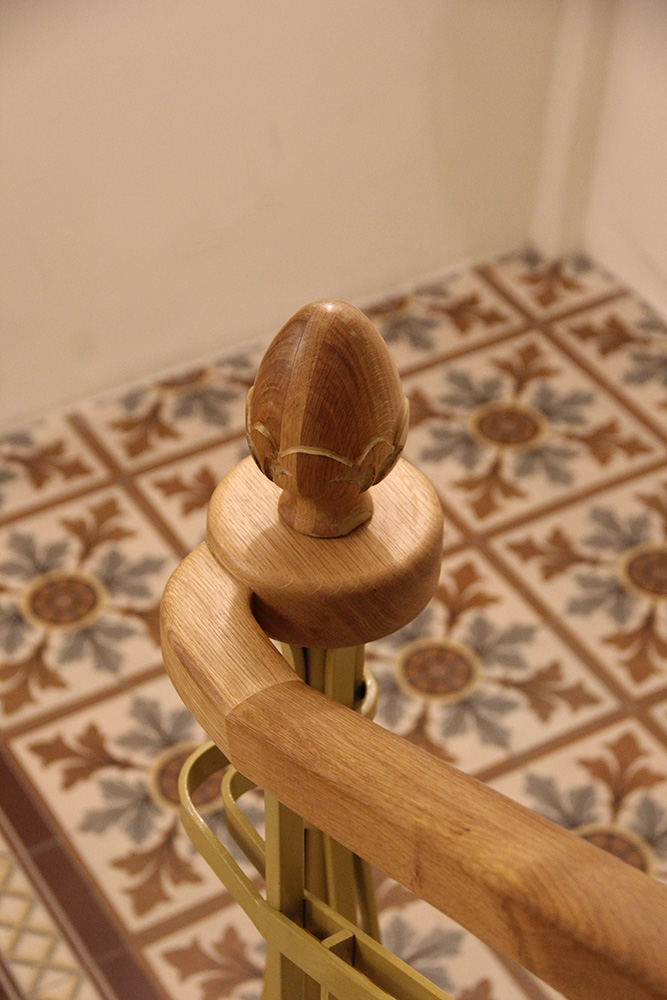
The floor coverings, produced by the Gilardi & Bettiza factory, have been preserved almost in their entirety. Special attention was also given to the staircase railing as an important element of the interior. It was restored based on the model of the railing preserved in the building of the Sulphur Baths in Split (another work by Tončić), in order to maintain the spirit of a unified work of art. In Art Nouveau, the idea of a unified work of art, also called Gesamtkunstwerk, refers to the idea of designing architecture, interiors, and decorative details as a single, harmonious whole.
The Grand Hall
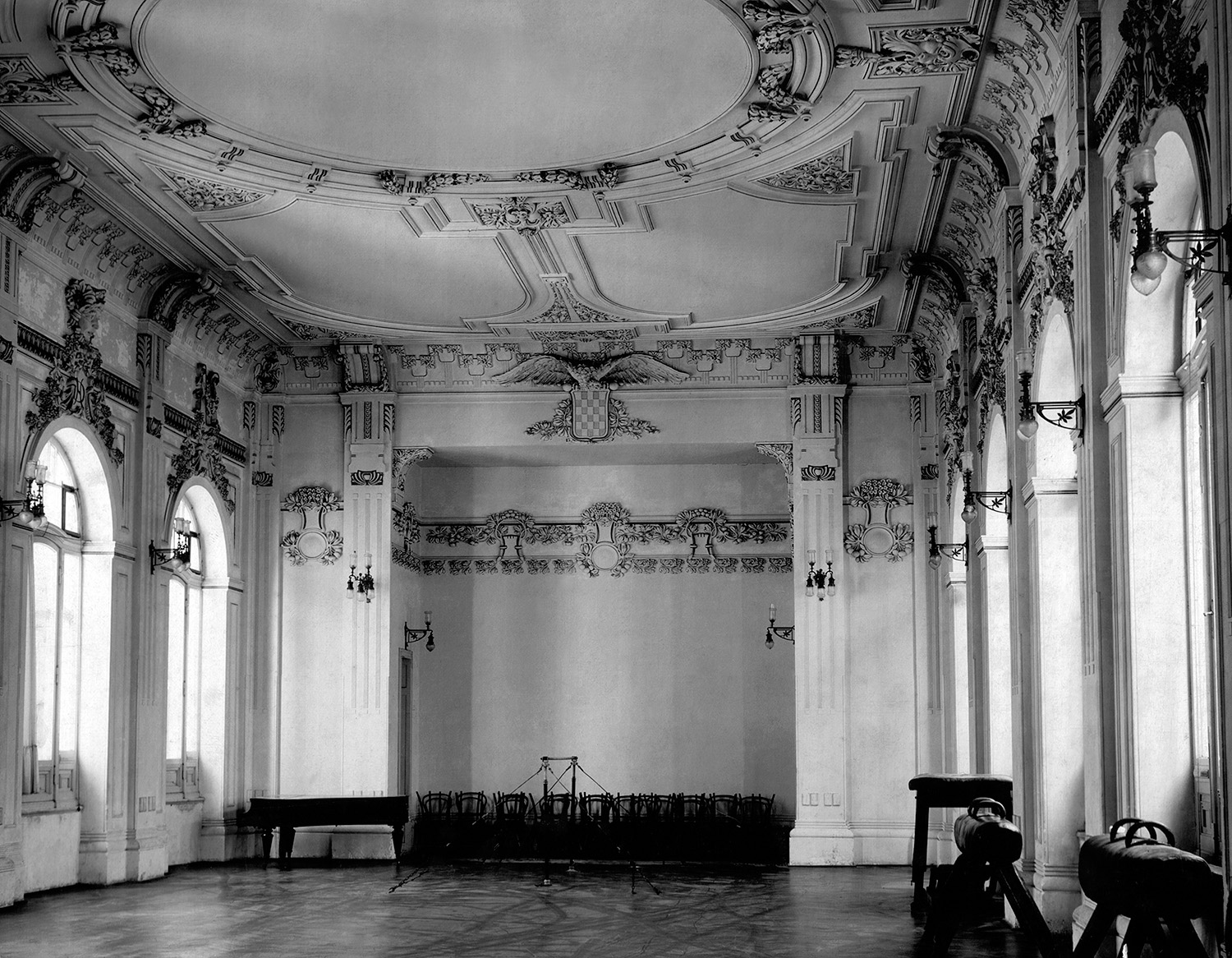
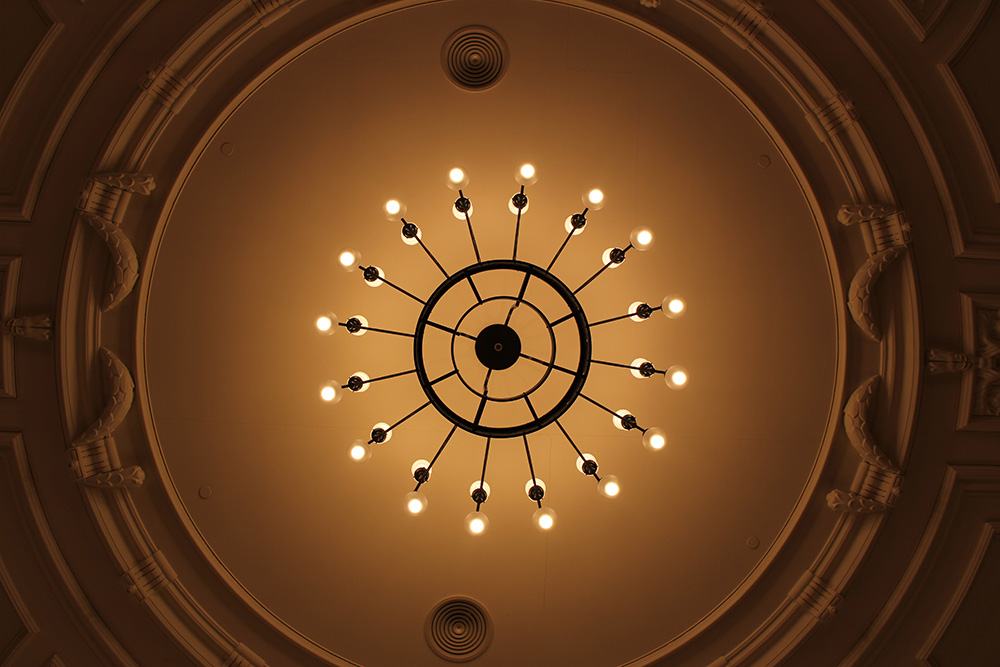
The Grand Hall was situated on the first floor of the rear wing, laid out in a rectangular plan measuring 9.5 × 18.6 meters. Its high ceiling, reaching 7.4 meters, rose higher than the two floors of the street-facing wing, creating an impressive vertical space. Tall, arched windows along the longer walls filled the hall with bright natural light, while a small, recessed stage occupied one end, surrounded by service rooms on three sides.
Grand Hall Decorations
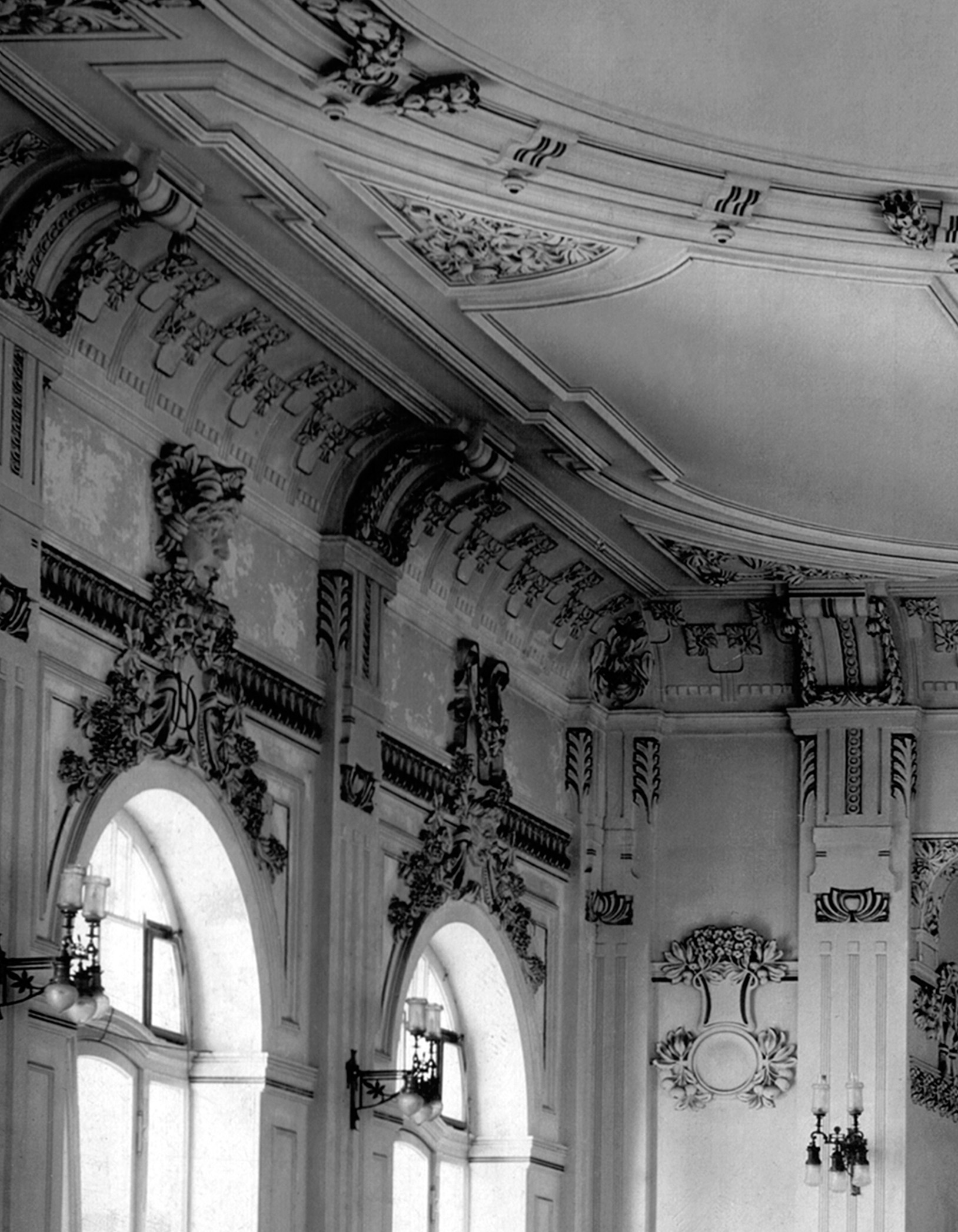
The Grand Hall walls were divided by pilasters with rounded capitals that visually supported the ceiling and created a soft transition between the walls and the ceiling. The hall was decorated with simple linear, floral, and abstract motifs. Stylized female heads, garlands, vines, and fruit ornaments flowed around the windows, balconies, and stage, visually wrapping the space.
The Interior
The hall exemplifies a combination of efficient spatial layoutand Art Nouveau elegance, with massive stone walls, wooden floors, and a two-pitched roof whose weight rests directly on the walls, leaving the ceiling structure unobstructed. Compared to the staircase and administrative rooms, the ceremonial hall is far more elaborately decorated, in accordance with its original appearance, emphasizing its public and representative purpose.
The Grand Hall Ceiling
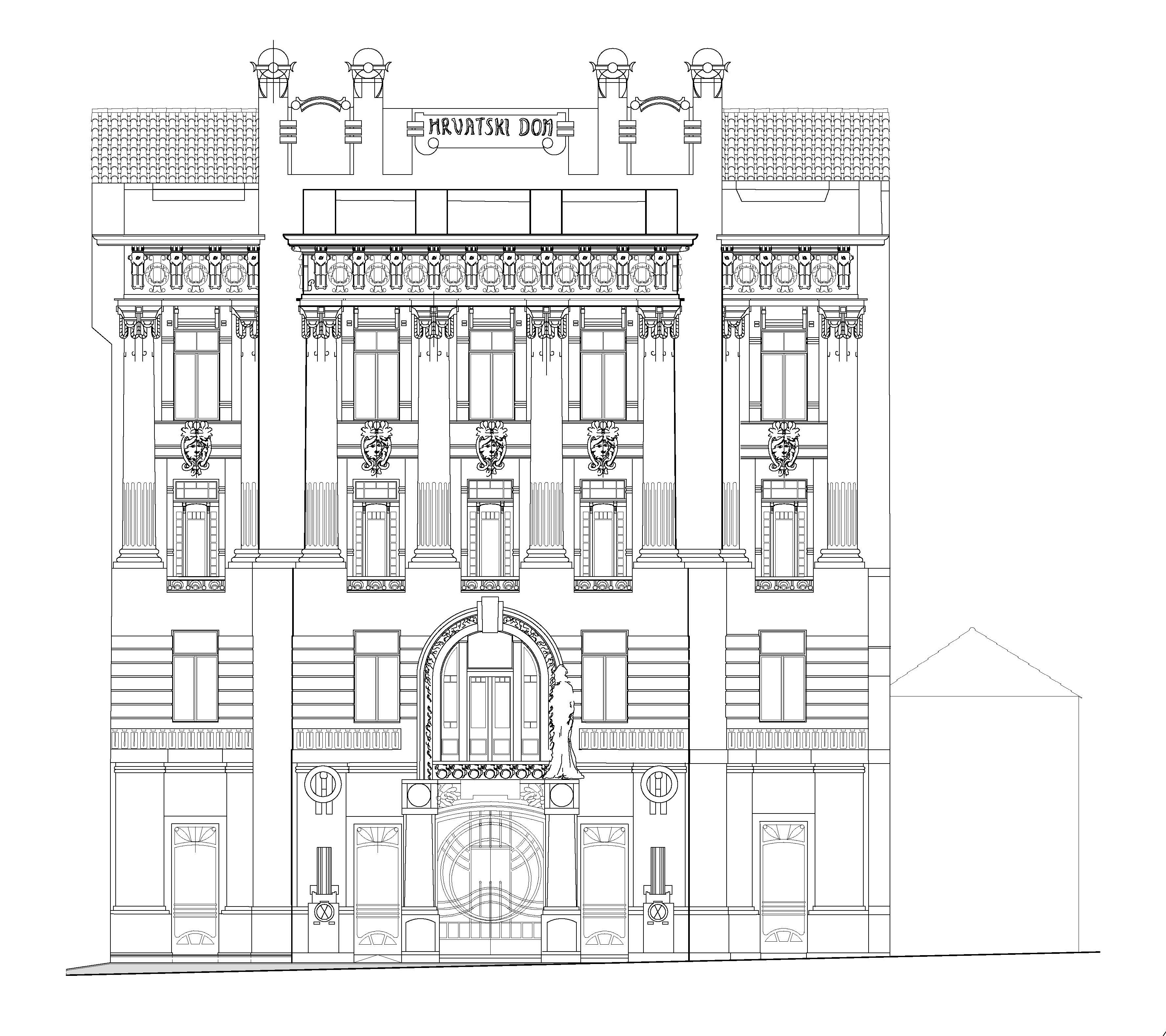
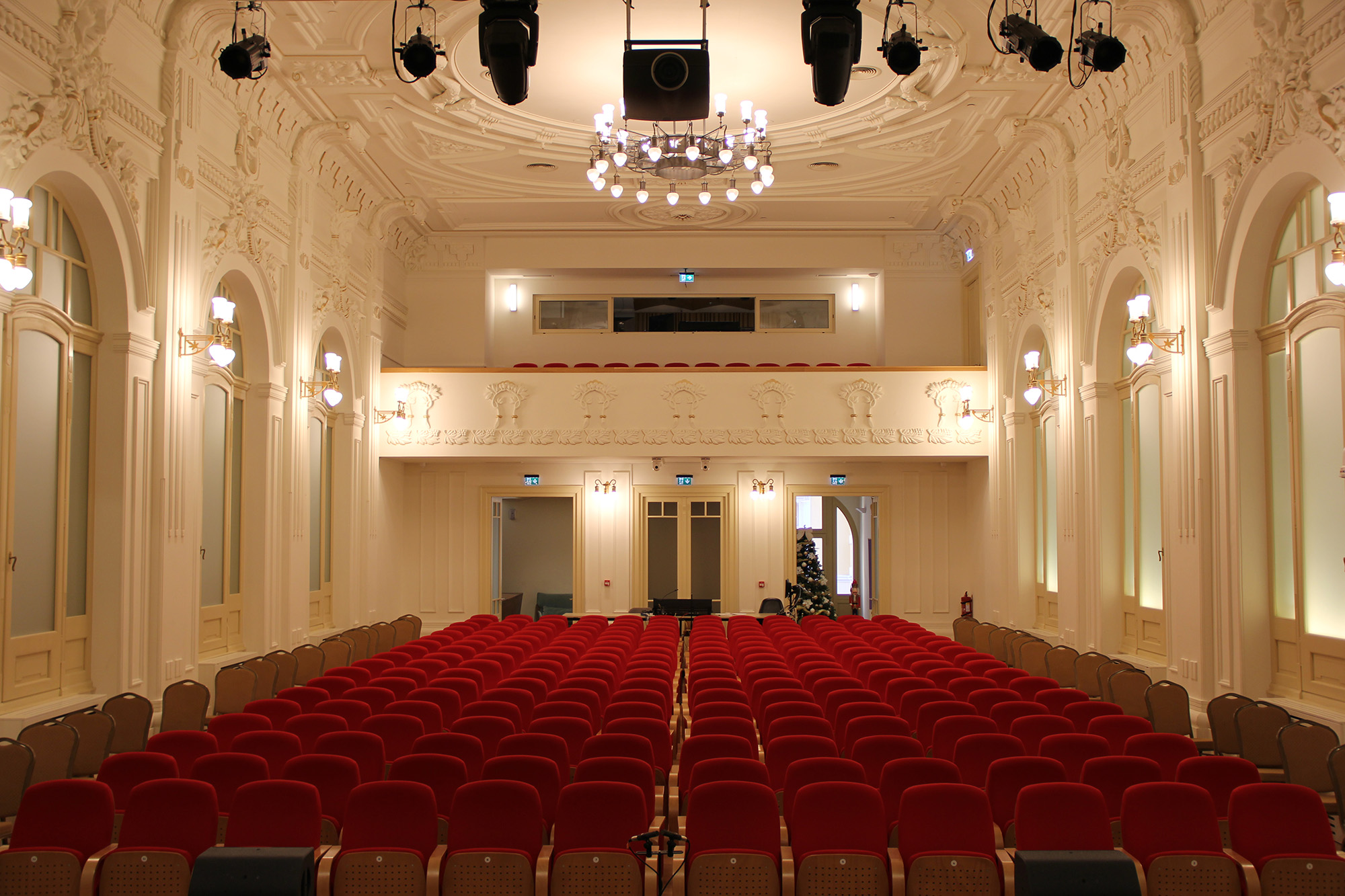
The ceiling features circular and rectangular panels framed with floral reliefs, while rounded pilasters and decorative wreaths complete a rich yet harmonious decorative design throughout the hall.
The Grand Hall Today
The main hall carries the name “Ivo Tijardović” after the renowned Split-born composer and conductor, honouring his lasting contribution to the city’s musical and theatrical heritage. With its reconstruction and reopening, the Croatian Home has regained its historic function as a house to all arts – a place for architecture, music performance, visual arts and design – reaffirming its role as a vibrant cultural venue in Split that continues to bring together heritage and contemporary creativity.